Thursday, September 27, 2018

Le Loyon

Residents of the areas surrounding the Maules Forest in Switzerland told stories about a mysterious man who walked around the woods wearing a long camouflage cloak and a gas mask.

He was named the ghost of Maules or Le Loyon by the locals. But with no proof of his existence, it was all brushed off as folklore.

In 2013, however, a passerby snapped this photograph of Le Loyon. Not long after, his cloak and gas mask were found in the forest with a note saying he couldn't take being seen as a monster. It is unclear what happened to him, but he was never seen or heard from again.

Tuesday, September 25, 2018

The killer in your attic

It's a tale as old as time. We've all heard stories involving a potential killer living in our attic who comes down when everyone is peacefully asleep. But this has actually happened.
In Germany in 1922, a farm owner named Andreas Gruber noticed that small things started going missing or being misplaced. His family also heard footsteps while Gruber himself found footprints in his house. A few weeks later, the entire family was found slaughtered in their home. The identity of the mysterious killer remains unsolved.

Monday, September 24, 2018

Charlie No-Face

If you're an American from the Pittsburgh, PA, area, chances are you've heard about Charlie No-Face, a faceless man who wanders the roads at night.

Slide 2 of 31: If you're an American from the Pittsburgh, PA, area, chances are you've heard about Charlie No-Face, a faceless man who wanders the roads at night.The story says the man was a utilities worker whose face melted in an acid attack or an electric accident, depending on who's telling it.

But, the truth is, the man was real. His name was Raymond Robinson and he was the victim of a childhood accident that completely disfigured his face. He, understandably, avoided crowds, opting to go for strolls at night.

Source: www.msn.com


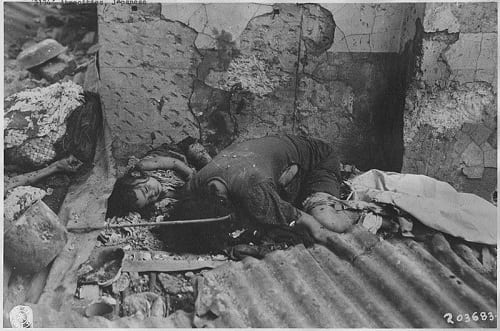
The horror stories from the Japanese Occupation

To describe the WWII tragedies that befell Filipinos as “creepy” won’t do it justice. Even calling it “horrifying” is an understatement. Without a doubt, the Japanese atrocities in the Philippines showed us how far humans could go in the name of honor and lust for power.


Jintaro Ishida, a Japanese veteran who served in the navy during WWII, once shared how his comrades in the Philippines learned to kill innocent civilians–including women and children–as if they were “just killing insects.” A well in a village somewhere in Lipa, for example, became the final resting place of about 400 Filipinos who were thrown to their deaths. A total of 2,000 people in Calamba were also massacred on February 12, 1945, with the old men strangled to their deaths using a rope because it was “an easier and cheaper way to kill them than with rifles and bullets.”