Showing posts with label pinoy horror stories. Show all posts

Thursday, October 3, 2019

The White Lady in Loakan Road

There are many urban legends about White Ladies but the one in Loakan Road in Baguio City is one of the most popular among campfire storytellers.
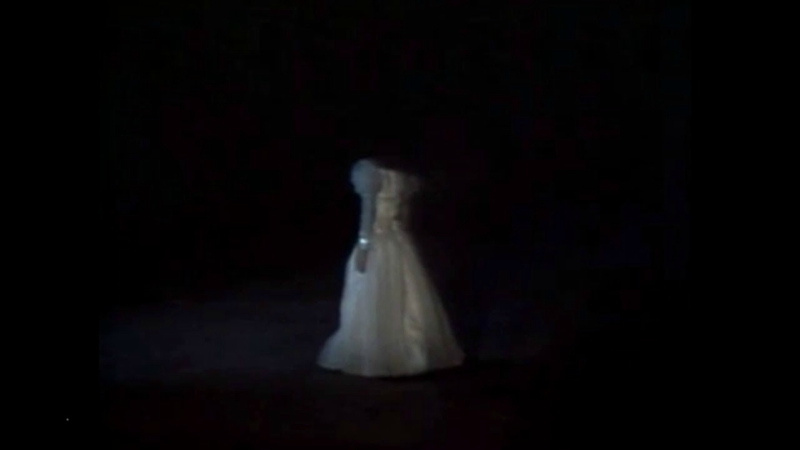

Loakan Road is an ideal setting for a horror story with a thick fog, dense woods, and vegetation on almost all sides. And the scary story about the White Lady who lurks the place has been told countless of times. Rumors have it that she’s the ghost of a nurse who was raped and slain by a taxi driver and discarded in the woods. Some drivers have claimed to have an up-close experience, she flags down cabs and whether drivers pick her up or not she hitches a ride in the backseat and disappears upon reaching the city.

Was it a ghost? The climate, the surrounding, and the headlight make it conducive to create a surreal image, so the ghost can be perceived as imaginary. Check out this story by Baguio taxi drivers:

A non-believer macho driver was flagged down by a woman.in white. He tried avoiding the woman but when he checked on his rearview mirror he saw the woman on the backseat furiously gazing at him with inflamed eyes. He stepped on the accelerator and shifted gears but his cab moved ever so slowly. He did this a number of times with the same result. And then he looked back at the rearview mirror and she was gone, he even turned around just to be sure that she was not there. But when he faced the road the woman was on top of the hood with her face flat on the windshield with an evil smile on her face.

The next morning the macho driver was seen in his cab, his hair turned white, shaking, and jabbering. Presently, he is confined to the mental hospital.

Tuesday, October 1, 2019

A Mischievous Poltergeist

A janitor at the Communications Building of Ateneo de Manila University completed cleaning the second-floor lavatories and was about to lock up when a security guard asked if he could urinate, the janitor agreed. 


When the security guard was relieved, the janitor went back and was surprised to see the walls and floors filled with streaky hand impressions made from the human muck. Irritated, he went down to confront the security guard who was oblivious. 

The security guard scratches his head in disbelief and turned his back to avoid a confrontation, the janitor was shocked to find a handprint at the guard’s white uniform.

The Communications Building is rumored to be haunted, most classes were moved to the Social Sciences Building.

Sunday, September 29, 2019

Taxi #45

The horror stories that we hear about taxicabs are those done by malefactors who abuse their passengers by overcharging, hold-up, and rape. But not this anecdote about Taxi #45 which is an urban myth from Davao City.


On a late night, a female hailed a cab to ferry her home. The moment she boarded the taxi she felt uneasy, something was off. To dismiss her anxiety, she engaged in a small talk with the driver so blah…blah until she noticed that there was no response. The driver just remained silent and unmoved.

Upon reaching home, she reached for the wallet to pay her fare. She handed over the money to the driver and was petrified to see his face was deformed with blood all over the body. She was aghast and immediately ran out of the vehicle. she turned around near her gate but the taxi was nowhere in sight.

The incident was reported to authorities but there was no record of Taxi #45 and the driver can’t be traced.

Monday, September 24, 2018

The horror stories from the Japanese Occupation

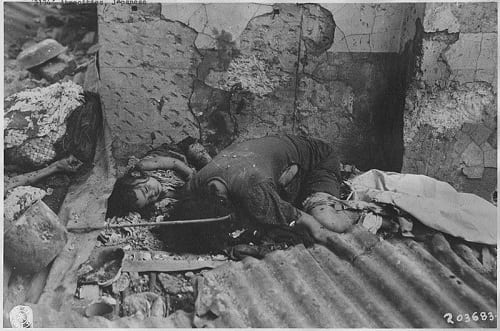
To describe the WWII tragedies that befell Filipinos as “creepy” won’t do it justice. Even calling it “horrifying” is an understatement. Without a doubt, the Japanese atrocities in the Philippines showed us how far humans could go in the name of honor and lust for power.


Jintaro Ishida, a Japanese veteran who served in the navy during WWII, once shared how his comrades in the Philippines learned to kill innocent civilians–including women and children–as if they were “just killing insects.” A well in a village somewhere in Lipa, for example, became the final resting place of about 400 Filipinos who were thrown to their deaths. A total of 2,000 people in Calamba were also massacred on February 12, 1945, with the old men strangled to their deaths using a rope because it was “an easier and cheaper way to kill them than with rifles and bullets.”